
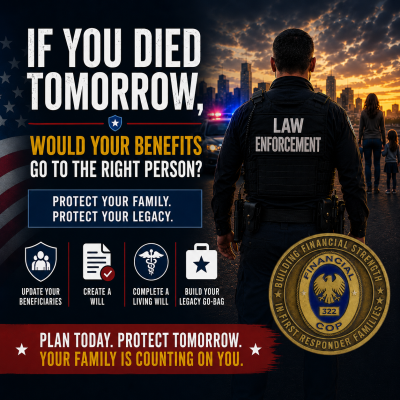
First responders prepare for worst-case scenarios every single day.
You train for emergencies. You protect complete strangers. You run toward danger while everyone else runs away.
But there’s one financial risk many first responders completely overlook. Outdated beneficiaries and missing estate plans.
At FinancialCop, we’ve worked with countless law enforcement officers, firefighters, EMS professionals, and other first responders who have built pensions, retirement accounts, deferred compensation plans, and life insurance policies — yet many still have no will, no living will, and beneficiaries that haven’t been updated in years.
Especially after divorce, and unfortunately, we’ve seen the consequences firsthand.
The Financial Mistake Too Many First Responders Make
One of the biggest misconceptions in financial planning is believing your will controls everything after death. It doesn’t.
Your beneficiary designations on life insurance policies, pension accounts, DROP accounts, and retirement plans often override your will entirely.
That means if your ex-spouse is still listed as your beneficiary, they may legally receive those benefits — even if you remarried years ago and intended for your current spouse or children to receive the money.
This happens far more often than people realize.
Not because first responders don’t care about their families. Quite the opposite. Between shift work, overtime, secondary jobs, court appearances, family responsibilities, and the daily stress of the profession, estate planning becomes something many people assume they’ll eventually “get around to.”
Until life happens first.
A Line-of-Duty Death Changes Everything
For first responders, estate planning is not hypothetical. Every shift carries risk.
If something happens tomorrow:
- Would your family know where your accounts are?
- Would your spouse have immediate access to benefits?
- Would your children receive what you intended?
- Would your family spend years dealing with probate court and legal confusion?
Unfortunately, we’ve seen estates tied up for years simply because beneficiaries were outdated or basic documents were never completed.
And here’s the harsh reality. Many department benefits are paid directly based on beneficiary paperwork, not verbal wishes, not family assumptions, and often not even your will.
The forms control the outcome. That’s why failing to review beneficiaries after a divorce can become one of the most devastating financial mistakes a first responder can make.
Most Families Are More Unprepared Than They Realize
According to national estate planning studies, most Americans still do not have a basic will in place, despite having children, retirement accounts, mortgages, and life insurance policies.
First responders are no exception.
In fact, many first responder families are even more vulnerable because of the unique benefits, pensions, and line-of-duty protections tied to the profession.
Without proper planning:
- The wrong person may receive benefits
- Families can face probate delays
- Children’s guardianship decisions may become complicated
- Survivors may struggle to locate accounts, policies, and passwords
- Financial stress can pile onto emotional trauma
This is not just about wealth. It’s about protecting the people you love during the worst moment of their lives.
Why Every First Responder Needs a Will
Far too many first responders still do not have a basic will in place — even though many unions, associations, and professional organizations offer these documents at little to no cost.
A properly prepared will helps:
- Protect your spouse and children
- Clarify your legal wishes
- Reduce family conflict
- Speed up the estate process
- Designate guardians for minor children
- Ensure assets go where you intended
Without one, state law determines many of those decisions for you.
And that’s not a risk most first responders would knowingly take.
Living Wills Matter Just as Much
A living will or medical directive protects your family if you survive a catastrophic injury but cannot communicate your wishes.
Unfortunately, first responders understand traumatic injuries better than most professions.
A serious vehicle accident, shooting, fire, or medical emergency could leave your loved ones making impossible decisions without guidance.
A living will helps:
- Define medical treatment preferences
- Reduce emotional stress on family members
- Prevent disagreements during medical emergencies
- Ensure someone you trust can make decisions on your behalf
These documents are not pessimistic. They’re responsible preparation.
The “Legacy Go-Bag” Every First Responder Should Have
At FinancialCop, one of the most important legacy planning concepts we discuss is the “Legacy Go-Bag.”
First responders already understand the importance of having a go-bag ready during emergencies. The Legacy Go-Bag applies that same mindset to your family’s financial future.
The goal is simple. Create one secure, organized location containing the critical information your family would need if you passed away or were seriously injured.
Your Legacy Go-Bag should include:
- Copies of your will and living will
- Beneficiary information
- Pension and retirement account details
- Insurance policies
- Passwords and account access instructions
- Important legal documents
- Funeral instructions
- Monthly bills and budgets
- Emergency contact information
- Letters to loved ones or department contacts
The reality is many first responders manage the finances in the household alone. If something suddenly happened, their spouse may not know where accounts are located, how bills are paid, what benefits exist, or who to contact.
A Legacy Go-Bag helps eliminate confusion during one of the hardest moments your family could ever face.
Financial Wellness Is About More Than Investments
At FinancialCop, financial wellness has never been just about investment returns or retirement balances.
True financial planning means making sure your family is protected no matter what happens.
That includes:
- Reviewing beneficiaries regularly
- Updating documents after divorce or remarriage
- Creating a will
- Establishing a living will and medical power of attorney
- Organizing a Legacy Go-Bag
- Ensuring your family knows where everything is located
The reality is simple. Many first responders spend years building financial security but never put the protections in place to preserve it.
The Time to Fix It Is Now
If you’ve been divorced, remarried, had children, changed departments, or simply haven’t reviewed your documents recently, this is your reminder.
Not next year.
Not after retirement.
Not when life slows down.
Take the time to review your beneficiaries, create a will, update your estate documents, and organize your Legacy Go-Bag.
Because if the unthinkable happened tomorrow, the people you love most should never be left dealing with preventable financial chaos.

Nick Daugherty
CEO FinancialCop